
|
|
In Memoriam |
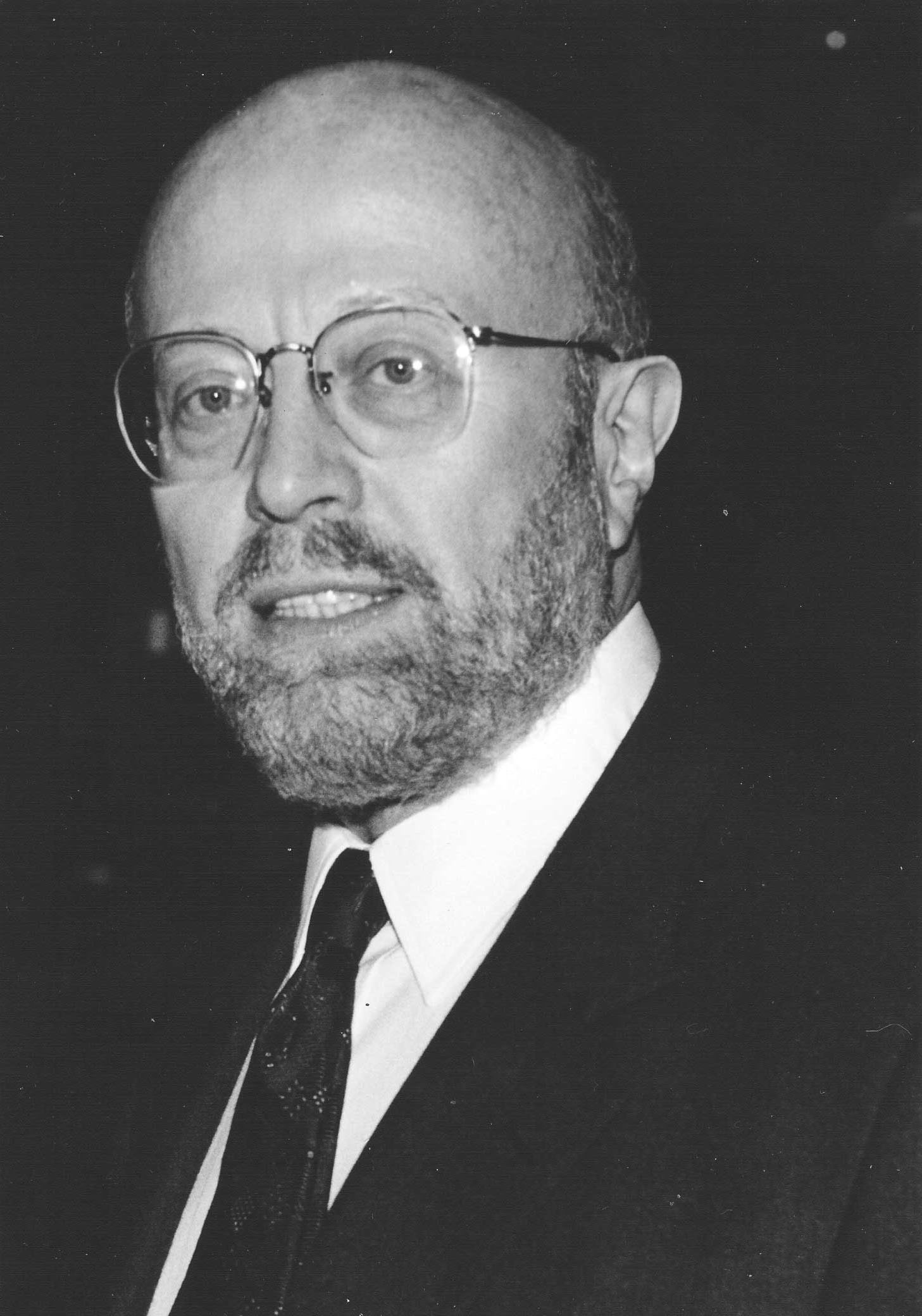
Jerry Goodman, one of the organizers of the Freedom Sunday for Soviet Jews, which drew an estimated 250,000 people to the National Mall in Washington on Dec. 6, 1987, died on Nov. 23. He was 93. Goodman founded the National Conference on Soviet Jewry in 1971 and led the group, which he described as a “coalition of 54 national organizations and over 300 local Jewish community councils and federations” on his LinkedIn page, until his resignation in 1989. He left to “pursue other areas of professional endeavor,” Jewish Telegraphic Agency reported at the time. “Goodman said that he was influenced in his decision by several important milestones in the Soviet Jewry movement, including the release of many long-term refuseniks, whom he had personally known, and the success of the Dec. 6 Freedom Sunday mobilization in Washington,” JTA reported on Feb. 1, 1988. The NCSJ chairman told the wire at the time that Goodman “has been the professional most responsible for placing the redemption of Soviet Jewry as a high priority in Jewish life” and was a “wise, intelligent and honorable executive, to whom the movement owes a debt it can never sufficiently acknowledge.” Goodman told the group’s executive committee when he announced his resignation that “I never thought Soviet Jewry would be a career,” according to JTA. “It was originally supposed to be a temporary job, but nobody foresaw how the movement would evolve.” Rabbi Andrew Baker, director of international Jewish affairs at the American Jewish Committee, told JNS that “the persecution and imprisonment of Jews in the Soviet Union demanded a response from the American Jewish community.” “But it took someone with consummate diplomatic and political skill, first to unite Jewish organizations in common purpose through the creation of the National Conference on Soviet Jewry, and then to place the issue high on the agenda of U.S.-U.S.S.R. relations,” he said. “This was Jerry Goodman’s work and his lasting legacy.” Testifying before a subcommittee of the House Foreign Affairs Committee on Feb. 6, 1984, Goodman said the NCSJ’s “primary purpose is very simple: to enable Jews to leave the Soviet Union in accordance with international law, and to help those who choose to remain in the Soviet Union to live as Jews with the same rights accorded every other Soviet national and religious minority.” He served his time in camps in Mordovia and the Urals. Upon completing his full sentence, he was placed under open police surveillance in the town of Luga—forbidden from living within 100 kilometers of any major city, a common Soviet tactic to marginalize former political prisoners. According to his LinkedIn profile, Goodman graduated from Christopher Columbus High School in Miami, studied for a year at Beit Berl College in Israel and earned a bachelor’s degree in political sociology at City College of New York, where he wrote for the Campus, the student newspaper. He also earned graduate degrees in international relations and public administration from CUNY and from New York University, per his profile. Goodman, who listed his languages as English, French, Hebrew and Yiddish, stated in the profile that he served as European affairs director at the American Jewish Committee from 1964 to 1971, as founder and senior adviser at the Archive of the American Soviet Jewry Movement at the American Jewish Historical Society from 2006 to 2011 and subsequently as a senior adviser at Strategy XXI-Partners and president and CEO at Phoenix Ventures. Mark Levin, CEO of the National Coalition Supporting Eurasian Jewry—formerly the National Conference on Soviet Jewry—stated that Goodman was a “pioneer and a giant of the Soviet Jewry advocacy movement.” “There were few individuals anywhere in the world who possessed the depth of knowledge and understanding of the Soviet Jewish community that Jerry did,” Levin stated. “Jerry led NCSJ from its infancy to one of our crowning achievements: the 1987 Soviet Jewry March in Washington, D.C., where more than 250,000 people stood in solidarity with the Jews of the USSR.” Among the chants at the event in Washington was “let my people go.” The next day, U.S. President Ronald Reagan told the Soviet leader Mikhail Gorbachev that “yesterday, I had 250,000 people in my backyard saying, ’Let my people go.' Until you do what they want, nothing will happen.” At the NCSJ, Goodmen “led the community effort in support of the Jackson-Vanik Amendment, which linked permanent normal trade relations to a country’s emigration performance,” he added. “Jerry also played an instrumental role in helping to create the U.S. Commission on Security and Cooperation in Europe, better known as the Helsinki Commission.” Levin stated that after KGB and other Soviet security agents detained him, Goodman and three members of Congress—who were on a joint trip to the Soviet Union in the early 1980s to meet with Jewish activists and refuseniks—for “allegedly possessing sensitive and secret material,” there was a question about what to do after they had missed their flights and were finally allowed to depart. “There was a subsequent discussion about whether we should publicize what had happened. Jerry convincingly argued that we should not make the trip about ourselves, but rather keep the focus on the Soviet Jews who were trapped and unable to leave,” Levin stated. “This was just one of many examples of Jerry’s clear-headed approach and leadership.” “Jerry Goodman’s imprint on one of the most important chapters of 20th-century Jewish history is indelible,” he added. Source: Dec. 29, 2025 / JNS |
|
Home Page |
Database | Recollections |
Our Interview |
Prisoners of Zion |
From the History of the Jewish Movement |
What Was Written about Us by the Press |
Who Helped Us |
Our Photo Album |
Chronicle | In Memoriam |
Write to Us |